
The Dietitian’s Dish: Cranberries, Nutrition, Health Benefits and U.S. Harvest Guide
November 20, 2026
At Heritage Pointe Communities we believe that healthy living starts with everyday choices, including the foods we enjoy. With November bringing cooler temperatures and Thanksgiving celebrations, it’s the perfect time to explore one of fall’s most colorful and nutritious ingredients: cranberries!
Known for their vibrant red color and signature tart flavor, cranberries offer more than a festive touch to the holiday table. These little berries contain antioxidants, fiber and essential nutrients that make them a flavorful addition to a balanced diet.
This month, we’re taking a closer look at the health benefits, history and fun facts behind cranberries, along with a delicious seasonal recipe to try at home.
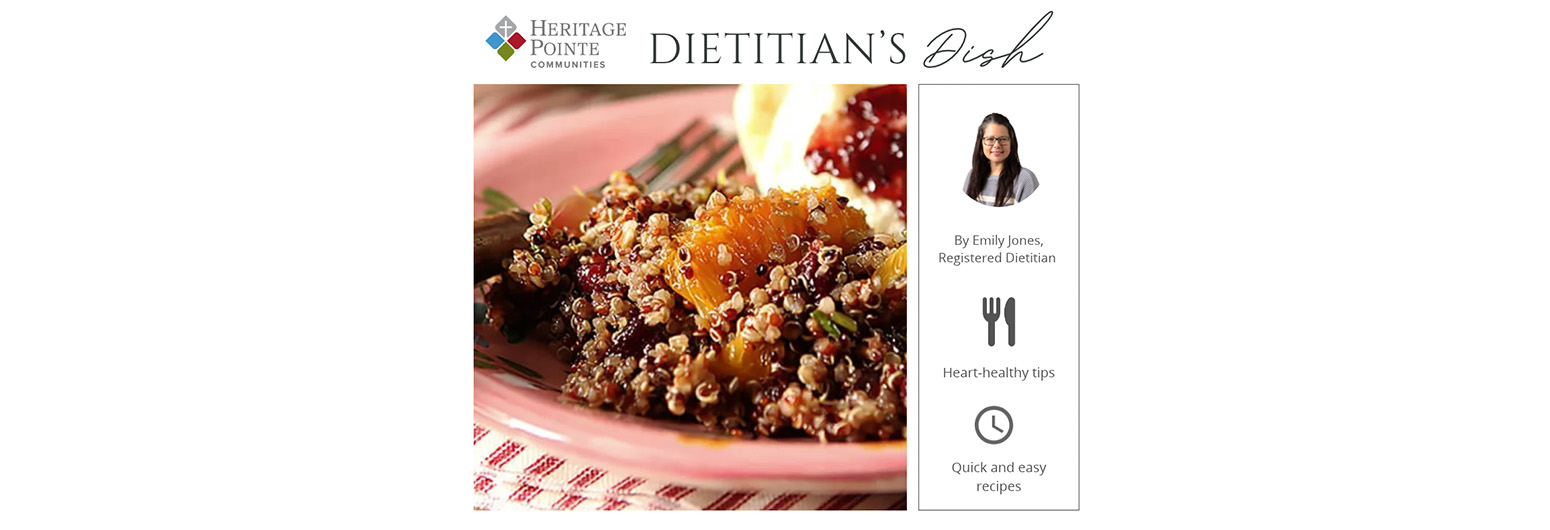
Fresh Cranberry, Orange & Quinoa Thanksgiving Harvest Salad with Toasted Pecans
Looking for a fresh addition to your Thanksgiving table? This colorful harvest salad combines tart cranberries, sweet orange, fluffy quinoa and crunchy toasted pecans, all tossed in a light citrus maple vinaigrette.
It’s a delicious balance of seasonal flavors and wholesome ingredients that makes a wonderful side dish for fall gatherings and holiday meals.
Recipe at a Glance
- Prep time: 15 minutes
- Cook time: 15 minutes
- Servings: 6
- Calories: 245 per serving
Ingredients
Salad Base & Quinoa
- 1 cup dry quinoa, rinsed
- 2 cups water or low-sodium vegetable broth
- 1 cup fresh raw cranberries, finely chopped
- 1 large navel orange, segmented and diced
- ½ cup chopped toasted pecans
- ⅓ cup crumbled feta cheese or goat cheese
Citrus Maple Vinaigrette
- 3 tbsp extra virgin olive oil
- 2 tbsp fresh orange juice and 1 tsp orange zest
- 1 tbsp pure maple syrup
- 1 tbsp apple cider vinegar
- ¼ tsp Dijon mustard
- Salt and freshly cracked black pepper to taste
Preparation
- Cook the Quinoa: Combine rinsed quinoa and water or broth in a saucepan. Bring to a boil, cover, reduce heat and simmer for 15 minutes until fluffy. Let cool completely.
- Prepare the Vinaigrette: In a small jar, combine olive oil, fresh orange juice, orange zest, maple syrup, apple cider vinegar, Dijon mustard, salt and pepper. Shake until well combined.
- Chop the Fresh Produce: Finely chop the fresh cranberries by hand or in a food processor. Segment and dice the navel orange.
- Toss & Serve: In a large salad bowl, combine cooled quinoa, cranberries, diced orange, toasted pecans and crumbled feta. Drizzle with the citrus maple vinaigrette and toss gently to combine.
Cranberry Nutrition at a Glance
Small but mighty, cranberries offer a variety of nutrients that contribute to a balanced eating pattern.
A ½-cup serving of fresh whole cranberries (approximately 55 grams) provides:
- Calories: 25 kcal
- Vitamin C: 16% Daily Value
- Dietary Fiber: 2.3 g (9% Daily Value)
- Manganese: 8% Daily Value
- Vitamin E: 4% Daily Value
- Copper: 4% Daily Value
- Glycemic Index: Very low
- Antioxidants: High in polyphenols
Cranberries are particularly known for their polyphenols, naturally occurring plant compounds that help protect cells from oxidative stress. Their fiber content also makes them a beneficial addition to meals and snacks.
What Makes Cranberries So Good for You?
Cranberries have earned their reputation as a nutritional powerhouse. Here are a few ways they can contribute to overall wellness:
- Urinary Tract Support: Cranberries contain compounds called proanthocyanidins (PACs), which have been studied for their role in preventing certain bacteria from adhering to urinary tract walls. Some cranberry products may help reduce the risk of recurrent urinary tract infections, but they do not treat existing infections.
- Heart Health: Cranberries contain polyphenols and antioxidants that have been studied for their potential role in supporting cardiovascular health.
- Digestive Wellness: Their natural fiber helps support healthy digestion and contributes to a balanced diet.
- Antioxidant Protection: Cranberries are rich in plant compounds that help protect cells from oxidative stress.
Thanksgiving & Cranberries: A Historic Harvest
Cranberries are more than a seasonal ingredient. They have a fascinating history rooted in North American traditions and agriculture.
Alongside blueberries and Concord grapes, cranberries are among the major fruits native to North America.
The Science of Wetland Harvesting & Native History
- Why Cranberries Float: Each cranberry contains four small hollow air pockets. These internal chambers make the berries buoyant, allowing them to float in water.
- The Wet Harvest: Commercial cranberry farmers flood bogs with up to 18 inches of water. Machines gently stir the vines, separating ripe berries from the plants so they float to the surface and can be collected.
- A Native American Tradition: Native Americans called cranberries “sasemineash” and combined crushed cranberries with dried meat and tallow to create pemmican, an early high-energy food.
Where Are Most U.S. Cranberries Grown?
Cranberries thrive in wetlands and bogs, making certain regions of the United States particularly well suited for growing them.
- Wisconsin: The nation’s leading cranberry-producing state, Wisconsin grows more than 60% of the U.S. commercial cranberry crop.
- Massachusetts: Home to historic cranberry bogs dating back to the early 1800s, Massachusetts remains an important part of the country’s cranberry industry.
When Is Cranberry Season?
Fresh cranberry harvest typically takes place in the fall, making October and November prime months to enjoy these seasonal berries.
While fresh cranberries are especially popular around Thanksgiving, dried, frozen and canned varieties make it possible to enjoy their distinctive flavor throughout the year.
Frequently Asked Questions About Cranberries
Are cranberries healthy?
Yes! Cranberries contain fiber, vitamin C and naturally occurring antioxidants called polyphenols. They can be a nutritious addition to a balanced diet.
How many calories are in fresh cranberries?
A ½-cup serving of fresh whole cranberries contains approximately 25 calories.
Are fresh or dried cranberries healthier?
Both can be enjoyed as part of a balanced diet. Fresh cranberries are naturally low in calories, while dried cranberries are more concentrated and often contain added sugar. Checking nutrition labels can help you compare options.
Can cranberries support urinary tract health?
Cranberries contain proanthocyanidins (PACs), which may help prevent certain bacteria from adhering to urinary tract walls. Some cranberry products may help reduce the risk of recurrent UTIs, but they do not treat existing infections.
Why do cranberries float in water?
Cranberries have four small air pockets inside each berry. These chambers allow them to float, which is why flooding cranberry bogs is such an effective harvesting method.
Which state produces the most cranberries?
Wisconsin is the leading cranberry-producing state in the United States, accounting for more than 60% of the commercial crop.
When are cranberries in season?
Cranberry harvest takes place in the fall, with November being an especially popular time to enjoy fresh cranberries.
The Dietitian’s Dish Takeaway
From their impressive nutritional profile to their unique harvesting traditions, cranberries are a wonderful reminder that seasonal foods can bring both flavor and variety to the table.
At Heritage Pointe Communities, we believe that supporting overall well-being means encouraging opportunities to stay active, maintain independence, and enjoy life’s everyday moments. Discovering nutritious foods and trying new recipes are just a few ways to make healthy living enjoyable.
Here’s to a flavorful November, nourishing choices and joyful living!
Related Articles

March 06, 2026
Blog
Loaded Cauliflower Soup
Cauliflower Facts The perfect substitute for starchier foods like rice and even pizza dough, cauliflower is versatile…

April 03, 2026
Blog
Deviled Eggs
Ingredients: 2 Dozen eggs 3 Tbsp Dijon mustard 2 Tbsp Sugar 3/4 cup Mayonnaise Pinch of salt to taste Paprika to Garnish…
May 27, 2026
Blog
Avocado Deviled Eggs
Ingredients 12 medium hard boiled eggs 2 medium avocados ¼ tsp garlic powder 1 tbsp…